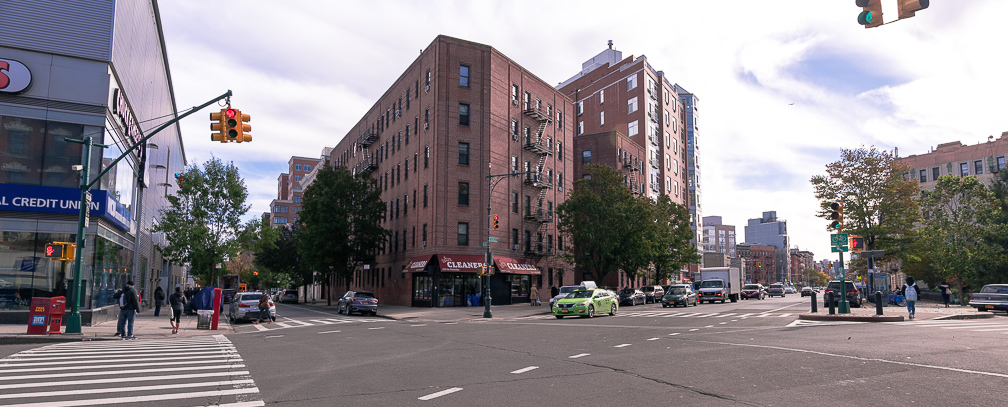
1980 Adam Clayton Powell Jr. Blvd. New York, NY 1002 •
Tel: (212) 662-8186 • Fax:(212) 222-9671
Ricky Jones
Director
Organizational Overview and Mission Statement:
Harlem Restoration Project (HRP) was founded in 1977 with the sole purpose of improving the quality of life in Central/West Harlem. During its history HRP has assisted an estimated 5,000 families to obtain housing services. Approximately 100 buildings have been organized, a dozen of which have gotten into the Tenant Interim Lease program. HRP has also served as Article 7A administrator with great success. Currently, HRP has title to three multiple dwelling with a total of 200 predominately low-income units.
For those who are not familiar with the organization, The Harlem Restoration Project, Inc. has been around for close to 30 years; has a multidisciplinary program providing comprehensive services for tenants, which includes: social services, computer literary, physical fitness, job referral and development, vocational and educational referrals, affordable housing, a thrift shop and more. We also have our Ex-offender Redirection Program helping long term ex-offenders make the transitions from prison to the streets.
Although primarily a tenant advocacy organization, HRP management and development program was a natural outgrowth of the organization advocacy and grassroots organizing history. The organization started as 7A administrators then housing management and now developing low-income housing in Harlem. The organization has managed up to 600 units, for which over 400 units were renovated by the organization HRP’s social service plans are in accords with the organization’s purpose: to increase the availability of affordable housing for people of diverse incomes; to enhance the delivery of social services, particularly for to ex-offenders, the homeless and formerly homeless population.
There is a real need for the development of a transitional housing facility for men and women that are released from prison. The formerly homeless and others mentioned would benefit from a 90day supportive, drug free and safe environment. Social Services participation would be the anchor of this program.
The thrift shop provides quality used goods to the community at reasonable rates. It also provides start-up wardrobes and furniture for ex-offenders, seniors, the homeless and emergency referrals from other CBO’s.
Social Services
During the early nineties Mayor Koch and later Mayor Dinkins acknowledged that people leaving the shelter system needed more than just a place to live; the people who fell through the cracks in the system also needed independent living skills. To offset recidivism of formerly homeless residents, supportive housing provided the answer by helping people to make the transition from dependent living to an independent living environment.
In 1991 HRP received its first support-housing project 1980 Adam Clayton Powell Blvd. A building that was part of the Special Initiative Program. The initial program design was to select a percentage of moderate, low and formally homeless tenants create an interactive environment facilitated by training community organizers and social worker, checkerboard the population throughout the building (i.e. low-income next door to a formerly homeless family) and then to allow the natural evolutionary synthesis to begin, taking the best of values, habits and principles (i.e. individual and community responsibility and more) to foster a better NYC.
The social service department provides resources for tenants, secure entitlements, provide case management and referral for people in need. The social service department also provides workshops in parenting, budgeting, household maintenance, tenant relationship, job preparation and vocational and education referral; as well.